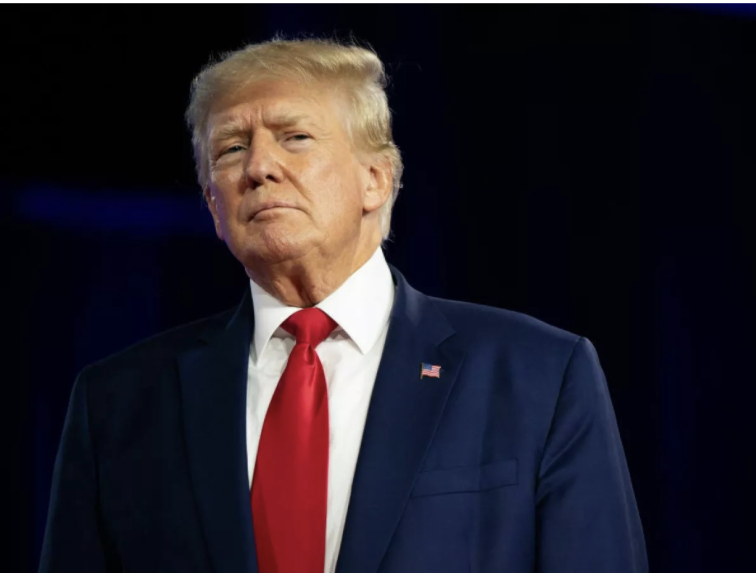
President Donald Trump stands on stage during a campaign event in Houston, Texas, on Feb. 3, 2026. Brandon Bell/Getty Images
During the first week of Black History Month, President Donald Trump shared a now deleted video on his Truth Social account depicting former President Barack Obama and former First Lady Michelle Obama using highly offensive imagery. The video showcased the Obamas as apes, a racist trope that has long been used as a way to dehumanize and embarrass Black people.
The post sparked swift criticism from both Democrats and Republicans alike, pushing the White House to respond and reopened previous conversations around Trump’s history of using racially charged rhetoric.
“I didn’t make a mistake,” Trump told reporters when asked about the video.
White House Press Secretary Karoline Leavitt said the post was shared by a staff member and described the anger from the public as exaggerated, referencing the video as an internet meme, and suggested that critics were overreacting.
The racist trope used in the video has historically been used to justify slavery, segregation and discriminatory practices within the United States. this stereotype garnered widespread attention within the American Zeitgeist during the early 20th century, specifically after the release of the 1915 film The Birth of a Nation. The film, which portrayed Black Americans in a very humanizing light also contributed to the resurgence of the Ku Klux Klan.
Criticism from both sides of the aisle followed within hours of the post.
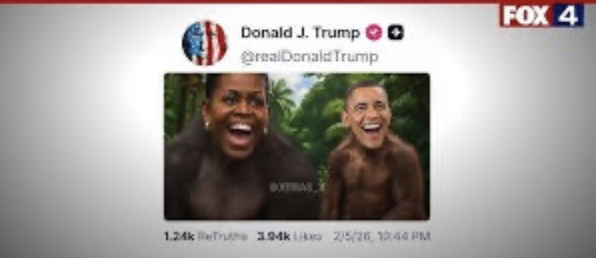
Trump posted a video depicting the Obamas as apes on his Truth Social account. Photo courtesy Truth Social.
Tim Scott, the only Black Republican senator, posted on X:
“Praying it was fake because it’s the most racist thing I’ve seen out of this White House. The president should remove it,” Scott said.
House Democratic Leader Hakeem Jeffries also responded on X.
“President Obama and Michelle Obama are brilliant, compassionate and patriotic Americans. They represent the best of this country. Donald Trump is a vile, unhinged and malignant bottom feeder,” Jeffries said.
Republican Sen. Roger Wicker called the post “totally unacceptable.”
“Racist. Vile. Abhorrent. This is dangerous and degrades our country,” said Senate Majority Leader Chuck Schumer.
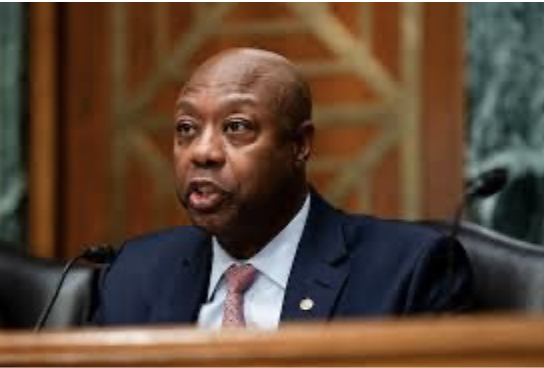
Sen. Tim Scott speaks during a Senate hearing in Washington, D.C., on Dec. 11, 2024. Bloomberg/Getty Images
The controversy also renewed attention to Trump’s past legal and political history regarding race.
In 1973, the U.S. The Department of Justice sued Trump and his father, Fred Trump, alleging that their real estate company violated the Fair Housing Act by refusing to rent apartments to Black tenants. According to court records, some applications from Black prospective tenants were marked with a “C,” allegedly indicating “colored.” Trump denied wrongdoing, and the case was later settled without an admission of guilt.
During his first presidential campaign, Trump used terms such as “animal” and “rabid” when referring to some Black prosecutors, remarks that critics described as racially coded language. Scholars and civil rights advocates have argued that such rhetoric can function as a political “dog whistle,” a term used to describe messaging that conveys one meaning to the general public while signaling something more specific to a particular audience.
In an interview with Youtuber Brian Tyler Cohen, Obama described the behavior as deeply troubling, and asserting that fellow Americans find the actions of the Trump administration in a similar light.
"There's this sort of clown show that's happening in social media and on television," Obama said, describing much of what is coming out of the White House as a “distraction.”
As the post continues to make its rounds across the internet, the question remains. What does accountability look like in this new age of politics?
Create Your Own Website With Webador